Old Website

Why NUDM?

India is the fastest growing major economy in the world, with an average growth of 7% between 2017-18 to 2018-19, and a consistently increasing share in the world’s GDP. It is the world’s seventh largest economy by nominal Gross Domestic Product (GDP) [Data source – State of the Economy in 2018-19: A Macro View, Economic Survey 2018-19] and the third largest by purchasing power parity (PPP) [Data source – State of the Economy in 2018-19: A Macro View, Economic Survey 2018-19]. As per the Ministry of Finance, India aspires to become a USD 5-trillion economy by 2024 and a USD 10-trillion economy by 2030.
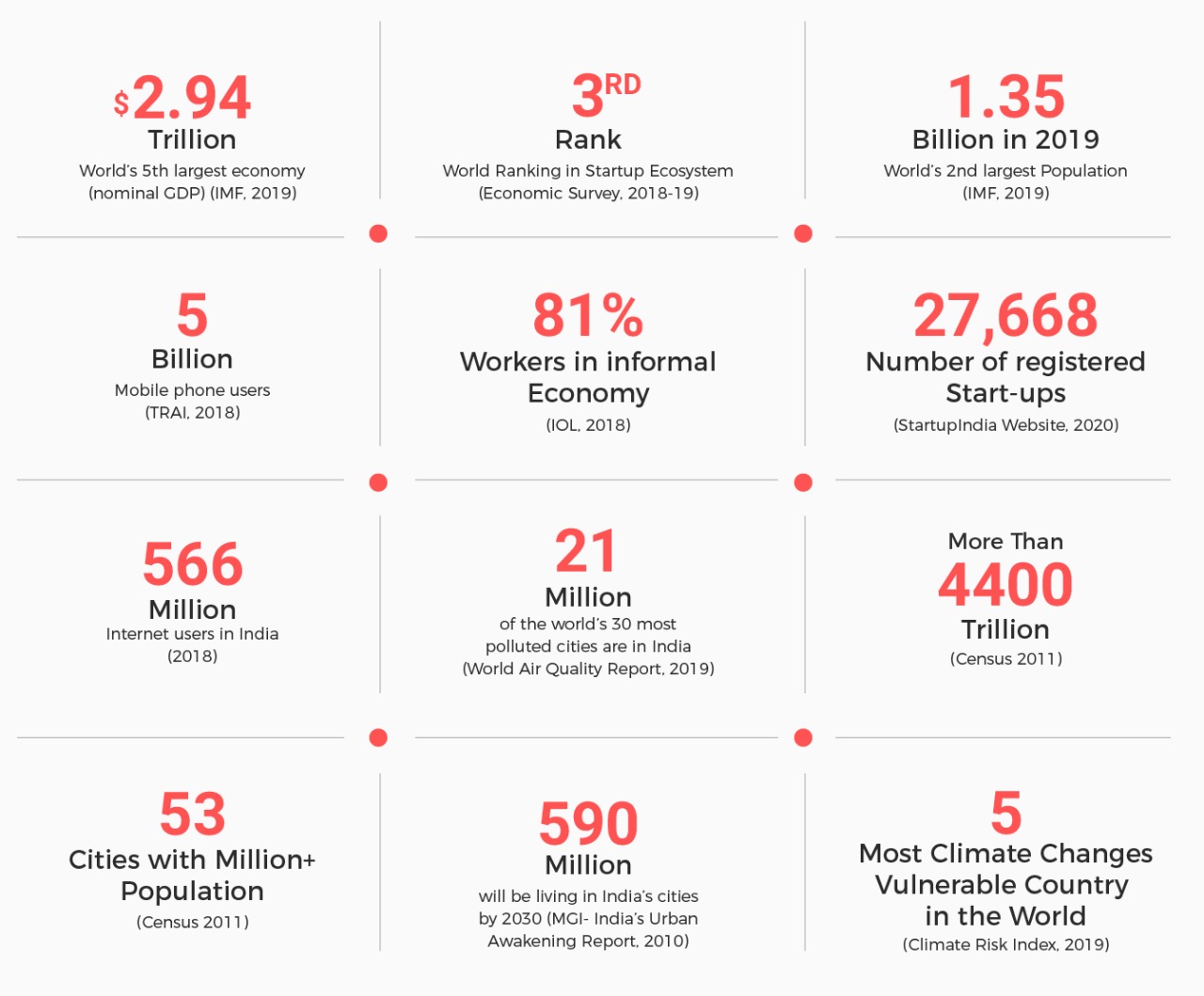

There are over 4,400 statutory towns and cities in India with around 40 crore inhabitants today. India is the second largest urban system in the world with almost 11% of the total global urban population living in Indian cities. In absolute numbers, the urban population of India is more than that of highly urbanised countries/regions across the globe. The country has reached a turning point in its journey of economic transformation wherein half of the country would be ‘urban’ in a few decades. Urban growth is expected to contribute to 73% of the total population increase by 2036.

Urban Challenge

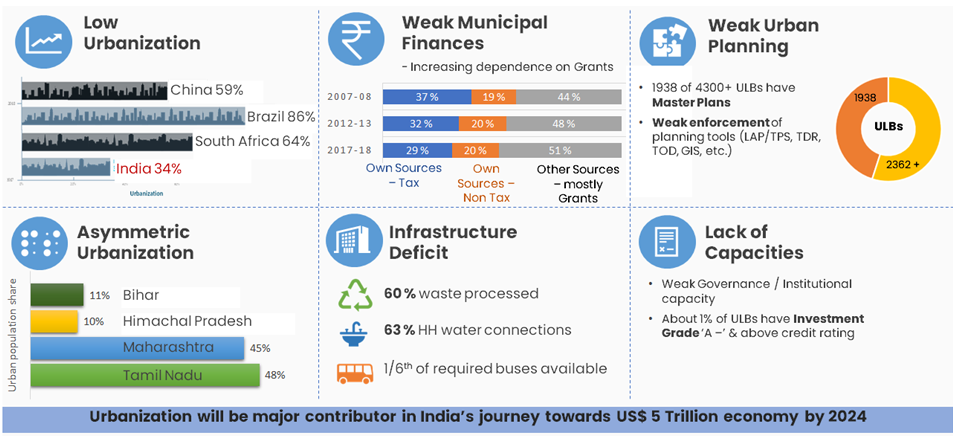
The hypothesis that urbanisation is necessarily beneficial for economic growth cannot be taken for granted. Our cities have to overcome a number of challenges in order to realize their potential as engines of growth. At present, 34% of India’s population lives in urban areas, with a growth rate of 2.4% in the 2010-18 period (World Urbanization Prospects, WUP, 2018). The level of urbanisation in India is low as compared to the BRICS economies such as Brazil (86.6%), South Africa (66.4%) and China (59.2%) (WUP 2018). The level of urbanisation across states is asymmetric. As per 2011 census, Tamil Nadu (48.4%) was the most urbanised among major states, followed by Kerala (47.7%), Maharashtra (45.2%) and Gujarat (42.6%). These four states together contributed to around one-third of the total urban population of India in 2011. States with low levels of urbanisation were Himachal Pradesh (10%), Bihar (11.3%), Assam (14%), and Odisha (16.7%). Approximately 70% of the urban population is concentrated in about 12% of its cities.

our strategy

Strategy is at the Heart of What We Do

Our team applies its wide-ranging experience to determining the strategies that will best enable our clients to achieve clear, long-term objectives.
digital strategy
55 %
financial services
75 %
counsalting
68 %
image-layers-4-01
image-layers-4-02
image-layers-4-04
image-layers-4-03
image-layers-4-07
image-layers-4-05
our strategy

Strategy is at the Heart of What We Do

Our team applies its wide-ranging experience to determining the strategies that will best enable our clients to achieve clear, long-term objectives.
digital strategy
55 %
financial services
75 %
counsalting
68 %
image-layers-4-01
image-layers-4-02
image-layers-4-04
image-layers-4-03
image-layers-4-07
image-layers-4-05

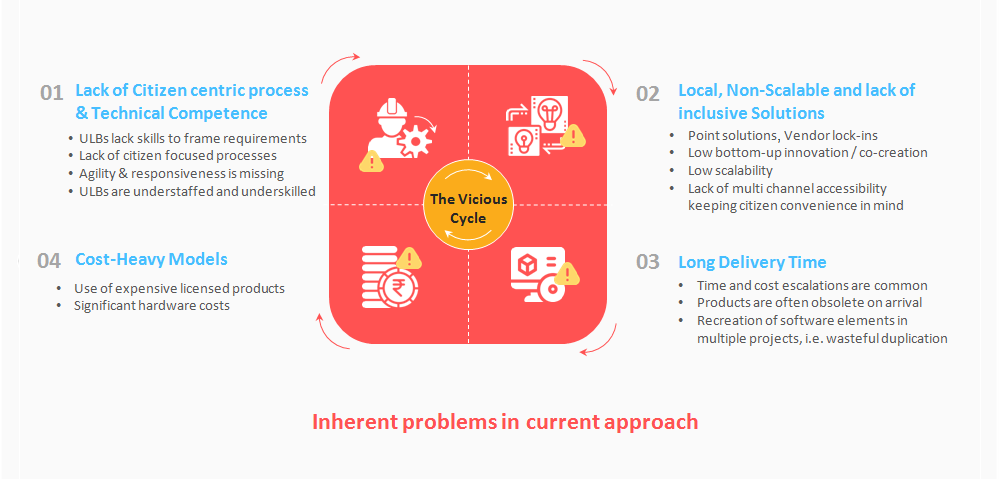
Indian cities suffer from inefficiencies of service delivery and severe stress on infrastructure. As India continues on its trajectory of growth, the quality of its urbanisation will become paramount to ensure that this growth is sustainable and equitable. This requires a shift from business as usual to a long-term, integrated approach towards economic growth and urbanisation.

testimonials

What People Say

#zikzag_carousel_695deb61644d6 .slick-arrow:before, #zikzag_carousel_695deb61644d6 .slick-arrow:after { border-color: #222222; } #zikzag_carousel_695deb61644d6 .slick-arrow{ background-color: #222222; }#zikzag_carousel_695deb61644d6 .slick-arrow:hover { background-color: #989898; } #zikzag_carousel_695deb61644d6 .slick-arrow:hover:after, #zikzag_carousel_695deb61644d6 .slick-arrow:hover:before { border-color: #989898; }